Saturday, April 6, 2013

Love

As the song goes: "What is Love? Baby don't hurt me, don't hurt me, no more..."

I pose the same question, What Is Love?
Through an extensive year of Theology, we come to learn that God is Love, true and eternal.

What does this mean?
God's Love is eternal, ever-present, ever-knowing, ever-omniscient, so large our human minds cannot comprehend to what level His Love for us reaches.
For us the magnificence of His Love is a Mystery, all we know is that He Loves Us forever.
The only thing comparable to His Love is a Mother's love to her child, other than that, it shall remain forever a Mystery of the Faith.

Friday, April 5, 2013

Subjectivity of Love

During the past week, and now that we are in the Easter season, I have been thinking about Love. Most of you may know the saying 'God is Love', which is true, because out of Love all is created, including offspring for the continuation of Life. But more importantly, is Love subjective?

For that, we need to know what we really mean by saying something is subjective. The Merriam-Webster Dictionary defines subjective as characteristic of or belonging to reality as perceived rather than as independent of mind.  This means that something subjective belongs to reality, it is not superficial and did not come out of someone's imagination.

So, lets rephrase the question, Does Love belong to reality?; Is Love superficial?

The answer is No. In human terms, love is an attraction, a feeling, a thought that holds the power to override any decision or action that a person makes. It is an incomprehensible force that can and will change lives. Love can seen only through its effects, but never in its simple existence. Those who are in love and their actions are the visible effects of Love, but it is not the Complete existence of Love, unconditional.

The only being capable of Unconditional Love is God, and He has showed us this throughout history, since our creation, to our salvation until today, and forever will. God loves us, no matter what happens to us or what we do, if we go back to Him, we will recognize His Love. The extent of His love is infinite, but to put it into physical human terms, it can be seen on the Crucifix. The image of Christ's brutal, inhumane Death is an example of just how much He loves us.

As for us, Love remains invisible, it will still affect us, and that incomprehensible force will always have its hold on our beings.

Vulgarity


Christ calls everyone to holiness. This is done by following his message. Christ teaches respect for every natural thing including human bodies. Vulgarity is a sin because is disrespects the inherent dignity of the body, which is a Holy instrument made by Christ. By putting that in a lesser place we are showing a blatant disrespect for the gifts God gave us. We must all be respectful to these gifts. Ephesians is the best place to find verses on this subject.
Ephesians 4:29”Let no corrupting talk come out of your mouth, but only such as is good for building up, as fits occasion, that it may give grace to those who here.”
Ephesians 5:4”Let there be no filthiness nor foolish talk not crude joking, which are out of place, but instead let there be thanksgiving.”

Tuesday, April 2, 2013

Saints are the greatest Sinners

Many people praise the saints as a model for holiness, which we should, however it is important to understand that they are not free from sin. They themselves most admit that they are the greatest of sinners. This true because a sins intensity all depends on mindset. There are two types of sins venial and mortal. Venial is not as bad and does require confession or serious reparation. But mortal sins are conscious acts against the will of God. Thus sense saints are often in such a close relationship with God, their sins are violating a more intimate sin. For example, saying a put down to a stranger probably won't hurt them that much. But saying it to your best friend with whom you have constant contact and have a very intimate relationship with, would upset them greatly. Thus the closer you are to God, the more serious are your sins.

Saturday, March 30, 2013

Holy Saturday

In this last day of the Holy Triduum, we remember those who have gone before us. As Christ enters the ranks of the Dead, we pray for the repose of those souls that are in the promised eternal life and communion with God and also compassion for those souls in cleansing, preparing themselves for the Kingdom of God in Purgatory.

Tradition holds that today, Holy Saturday, the Son of Man fights and is victorious against the Fallen Angels, which leads to the opening of the Gates of the Kingdom of God, now known as the Gates of Heaven. Today, in 2013, it seems a bit unimportant that Christ opens the Gates, because, well, they're already open. Yes, that is true, but back then, around 33 A.D., most believed the Afterlife was simply a continuation of life on earth, one place where nothing happens, simply a congregation of souls at peace. It did not matter what you did in this world, for you ended up in 'Sheol', Hebrew for 'place of the dead'.

The Importance of Christ's entrance into Sheol is that He, as the Son of Man, gives the Good News to All, and that includes everyone who has passed before us, those living now, and the people to come. In His life on Earth, He preached to those living, and passed His authority to teach, govern, and sanctify to the Apostles. (Matthew 26) This is now referred to as the "Great Commission." The Church obeyed Christ, and has been preaching, teaching, and sanctifying the same beliefs and morals that a humble carpenter from a small town in Northern Israel taught more than two thousand years ago. Now that the Church is preaching the word to the living, the only people left to preach, teach and sanctify were those who had not heard His word yet: The Dead. Therefore, He enters the place of the Dead, preaches the Good News there, and brings with Him the righteous who truly deserve to be in the Kingdom of God. This is the final step to be able to fulfill God's plan of Salvation promised to Adam and Eve in the Protoevangelium. (Genesis 3:15)

I know that now there are multiple questions that come up. Why does God want to save us in the first place?
Was it necessary to suffer and die a slow and painful death, only to achieve the opportunity to regain lowly and mostly disobedient things that He Himself created? These questions I will answer, but if you have any other questions, please email me at og2bemfa@gmail.com, and I will post the answers on here to the best of my ability.

For the first question: Why does God want to save us in the first place?

Well, to answer this question, we must go back to the question of "What makes applicable for Salvation?" If we need Salvation, someone must have done something wrong. Yes, most of us have done something wrong, therefore, who was technically the first sinner? To know the First Sinner, we must know the First Human. According to the Creation stories, that title goes to Adam and Eve of Genesis Chapters 1-3. Alright, what did they do wrong? According to the story, Eve was tempted by a talking snake, analogous to the Fallen Angel Satan, to eat an apple, but not just any apple, it was an apple of a specific tree, planted in the center of their home, the fabled Garden of Eden in the Kingdom of God. The tree, Tree of the Knowledge between Good and Evil, was the only tree in the whole Garden that both inhabitants were prohibited to eat from. Regardless of the rule, Eve, the story furthers, fell to the temptation and ate of the forbidden fruit, which she also passed onto Adam. Once this happens, the whole world changes forever. This action marks the beginning of sin in the world. This disobedience to God lead to the exile of Adam and Eve of the Kingdom and the Garden was forever closed, and guarded by Angels. The interesting thing is that while God exiles the First Humans, he also gives them a promise: that one of their descendants would save them, "I will put enmity between you [Satan, the snake] and the woman, and between your offspring and hers; They will strike at your head, while you strike at their heel" (Genesis 3:15). This verse from the Bible is also referred to as the Protoevangelium, meaning First Gospel, because it is the first time in the Bible that God promises Salvation and reunion with Him. This makes us applicable for Salvation, and God has already showed a promise to save us from Satan, his temptations which lead us to Sin. 

On the second question: Was it necessary to die a slow and painful death, only to achieve the opportunity to regain lowly and mostly disobedient things that He Himself created?


My answer in short: Yes. But let me explain why.

As we established earlier, God loves us, to the point where even if we turn our back to Him, He still wants us close. The only type of love that can relate to His love for us is Mother's to a Child. God is willing to do anything, literally anything to get us back. The story and the Historical proof of God's plan is called Salvation History, and the most famous written accounts of how He comes about achieving this plan is called The Bible. 

Throughout this Salvation History, we see great leaders of men: Abraham, Jacob, Joseph, Moses, David, Solomon, Daniel, Isaiah, and many other Prophets and Men who accepted God's mission for them. All leading a specific group of people out of problems, but that group of people just seems to be clumsy enough to get into other problems. These people are the Hebrew Nation, later called Israelites, now known as Jews. Their story, and their laws make up the Old Testament. During this time, God gives His people clues, ideas of what the 'Messiah' or Savior could be. This is when the story of God's love reaches a climax. The birth of the Christ, Jesus comes in. By this time, there had been many prophecies about the Messiah: his lineage should be from the great King David: Joseph, his father was a descendant of David, he was to be born in David's City: Bethlehem  and to be born from a virgin Mother: Mary; among other clues and descriptions that can be found in the Old Testament. Interestingly enough, Jesus fits all of the descriptions. 


On another side note: How can a human being be born from a Virgin mother? This is not physically possible, but we Catholics believe that for God nothing is impossible. Therefore, Mary's womb could be filled with the Messiah and the Incarnation could take place. For further information, investigate Mariology.


Incarnation: The mystery and belief that Jesus is God Incarnate, both Human and Divine. Christology goes deeper, but for a short explanation, for God's plan to work, the sacrifice necessary would have to be great and be made by God Himself, but also a Human Being. Only Jesus is able to fit that description, also.


Once Jesus begins His public ministry: preaching, living, and teaching God's Word to the people, He gains popularity. He performs miracles, teaches on the Kingdom of God and a lot more. The chronicles of His life, death, Resurrection, and the story of His twelve best friends-Apostles- is recorded in the New Testament. 


After three hard years of preaching, he finally reaches Jerusalem. Remember my earlier posts on Holy Thursday and Friday. This is when they come in. Long story short, He is crucified on a cross, as if he was a vile criminal. Fortunately for us, He also left many proofs of His existence and His marvelous deeds. His famous words before dying, "It is finished." mark the end and completion of Salvation History and Our Salvation. The One, Holy, Catholic and Apostolic Church, now headed by Pope Francis, continues His work.

Friday, March 29, 2013

Good Friday

On this day of sorrow and silence, we remember one who loved literally to death. Tradition holds that today is the anniversary of the Crucifixion of Jesus the Nazarene, betrayed by one the twelve, Judas Iscariot, for 30 silver coins. It is said that this morning, He was carried around Jerusalem until the final sentence was said: Death by Crucifixion  He was tortured, beaten by sticks, then flagellated and finally nailed to a cross, left there to suffocate His way to death.

Tradition and the Gospels that recount the events that happened today almost two thousand years ago hold that after sharing bread and wine with the twelve Apostles, Jesus went to pray to the Garden of Gethsemane. There, he prayed until he started sweating blood. He withstood many temptations until he was apprehended by the Sanhedrin, a council of the High Priests in Jerusalem, and sentenced to Death because of alleged blasphemy. From there, He answered questions from Pontius Pilate, the Roman Governor of Jerusalem, and the Roman Governor of Galilee, Herod Antipas. Both found him innocent. The Sanhedrin later pushed Pilate to an ultimatum, crucify the Nazarene, but only after some general clamor and possible rioting. Pilate decided to punish Jesus to flagellation at the stake, but not death. Unfortunately, that did not satisfy the High Priests. They wanted Him crucified. Pilate finally gives in and orders the Nazarene, alleged King of the Jews, to be nailed to a cross, by hands and feet, left there to die of suffocation. Three hours later, the soul of the Son of Man returns to His Father.

Crucifixion is probably one of the worst ways to die. It is one of the most perfected ways of mortal torture. The way it works is quite simple, you pin down the victim's limbs by nailing them in the wrists and ankles-in this way there is less blood flow and connection to the rest of the body, this leaves the rest of the body to fall and put more weight on the feet, and an extended stretch of the arms. Consequently less oxygen is led to the brain, therefore to be able to breathe appropriately, one has to push on the nail wounds, which hurts it even more. In a regular crucifixion, the slow and painful death can last up from 5 hours to almost 3 days. The fact that it only took 3 hours for Christ to leave His corpse on the cross is quite astonishing, but looking at what he went through before reaching Calgary Hill makes it more reasonable.

Holy Thursday

Yesterday's sunset marked the beginning of Lent's last three days: The Easter Triduum. These three days of remembrance coincide with Christ's Passion, Death, and Resurrection and Christ's promise which is cataloged in the Gospel of John's Chapter 2:19. "Destroy this temple, and I will rebuild it in three days." During these three days, we accompany Christ onto his Cross on Good Friday and watch him resurrect from the dead on Easter Sunday, all of which was done for the sake of our salvation.

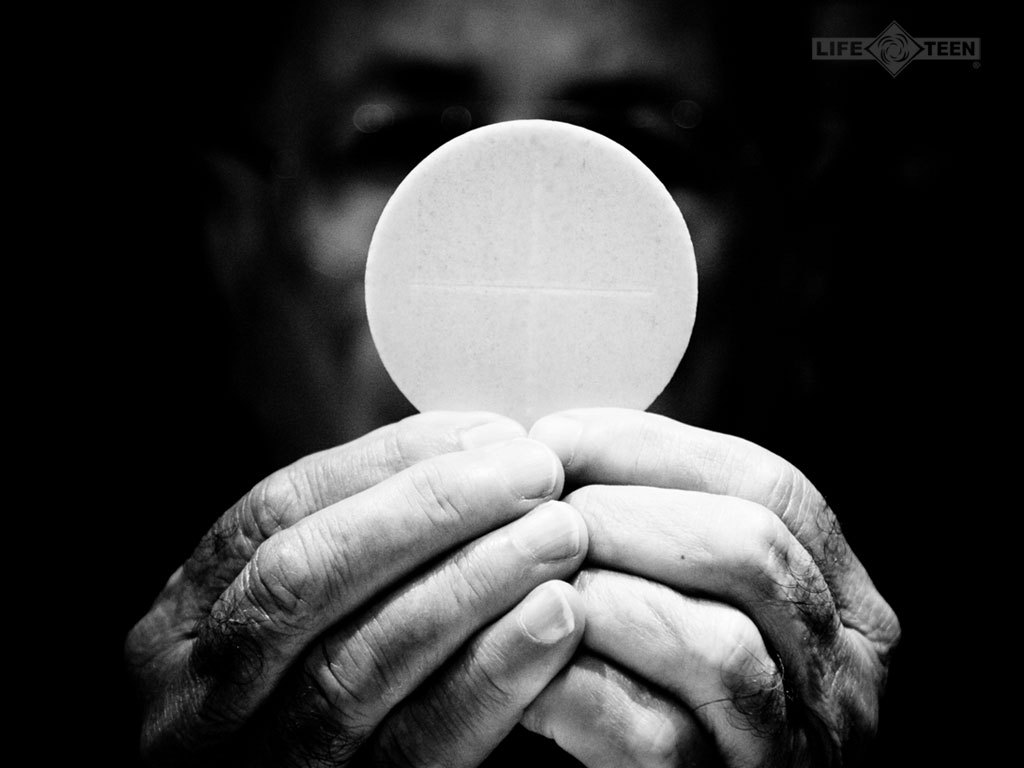
Holy Thursday, the first day of the Triduum, we remember a very important teaching that Christ gave us and we still practice today, the Liturgy of the Eucharist. This stems off of an annual Jewish practice done since the Exodus from Egypt, Passover. The Jewish feast is a meal of unleavened bread, a 1 year old, unblemished male lamb, and bitter herbs. (Leviticus 23:4-14) The feast is done every year, just as God prescribed them to do. Jesus and the 12 Apostles were Hebrew men, which meant that they also participated in the annual pilgrimage to Jerusalem and partake in the celebration of Passover. But on one night, Jesus took the bread, broke it, blessed it, and passed the bread to the twelve Apostles. He explained his actions by saying that the bread was his body which was going to be sacrificed for their sake. At every Mass, daily, for the past two thousand years we repeat his very words and continue his actions, spreading the blessed Eucharistic hosts, transubstantiated into the Body of Christ. Jesus repeated the same actions with the chalice of wine. We also do the same, the wine transubstantiates into the Blood of Christ.

As a side note, the chalice of wine that Jesus drank of, blessed, and passed to the other twelve is now known as the Holy Grail, and has been searched for by many people and for many centuries.

Another important thing to note about Holy Thursday is that it is the last Liturgical celebration before the Easter Vigil. This is because on Good Friday we remember Christ's loving sacrifice of the Cross, and the opening of the Gates of Heaven to all on Holy Saturday. The Tabernacle, an ornate box which holds any leftover pieces of the Body and Blood of Christ to be used at the next mass, is left open. It usually is closed and is always a signal of God's Presence, but we accompany Him during his Passion on Holy Thursday evening until his death, traditionally held from noon on Friday to 3 p.m. The Body of Christ is left on an Altar of Repose after Thursday's Mass and remains there until Easter Sunday. All Churches are open for all to come and follow Christ in his sacrifice for us, for our sake, and for our salvation.